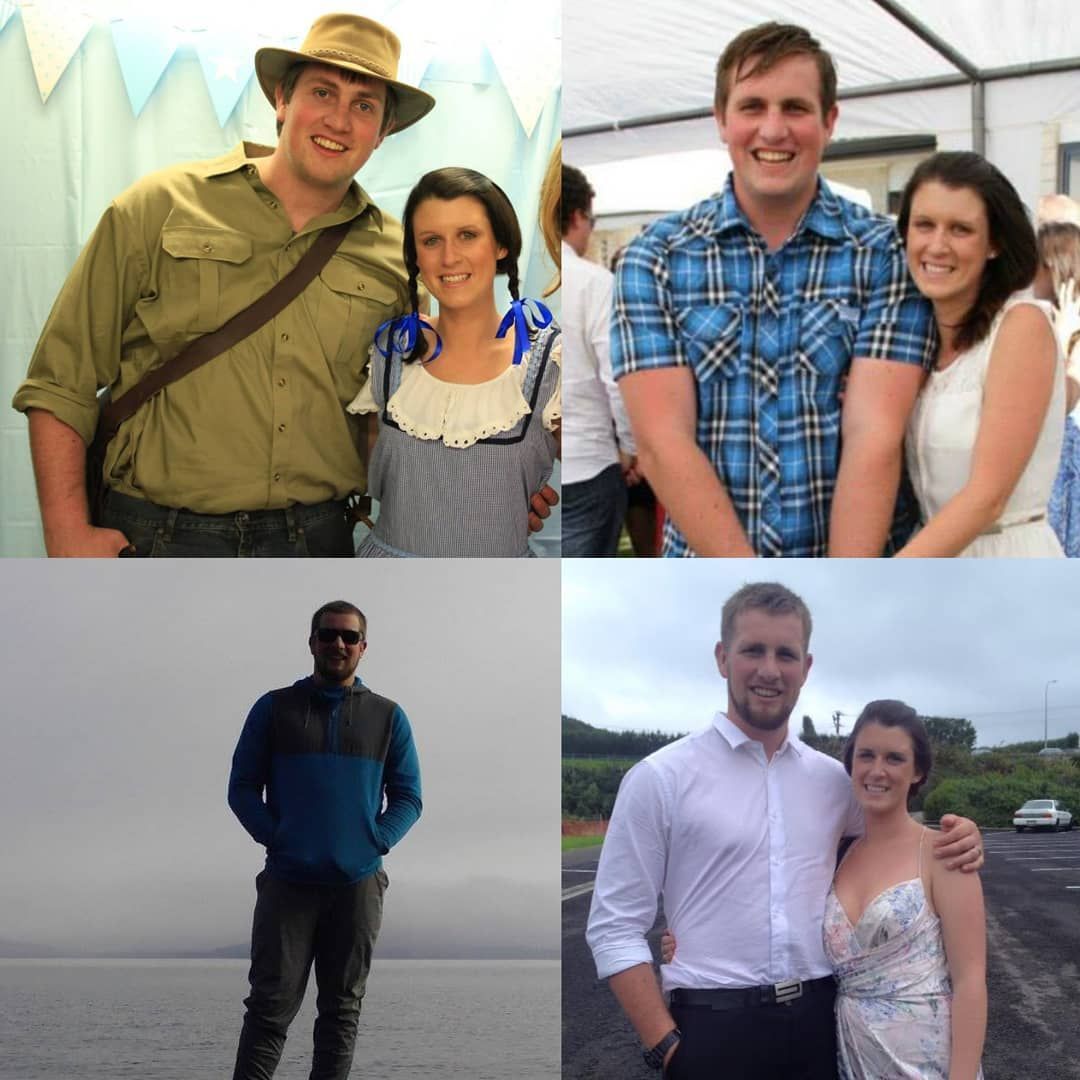
From Active Teenager to 147kg at 21


As a teenager I was active, sporty, and could eat anything without thinking twice about it. I was one of those kids who just stayed lean no matter what. I didn't think about food or exercise. It was just part of life.


Then I left school, started earning money, and real life showed up all at once. A job. Study. Bills. The kind of low-level stress that doesn't go away because it's just Tuesday. I didn't have great tools for dealing with any of it, so I did what a lot of people do. I turned to food. Not just eating a bit more, but genuinely using food to celebrate, to comfort, to decompress, to get through the day.


Between 18 and 21 I went from 82kg to 147kg.


I told myself I was fine. My knees hurt? Must be the job. My back was sore? Long days on my feet. Couldn't sleep well? Stress. I had an excuse for every symptom and I believed every one of them. Looking back, I was kidding myself completely.


The Wake-Up Call I Didn't See Coming


The thing that changed everything wasn't a doctor's appointment or a health scare. It was my soon-to-be wife getting in the car for a date, looking at me, and saying: "You've become really fat. It's unattractive and you need to do something about it."


Not exactly what you want to hear from the woman you're quietly making an engagement ring for.


But it was the most honest thing anyone had ever said to me. And somewhere underneath the sting of it, I knew she was right. Not just about how I looked, but about everything I'd been avoiding. I had an outward problem, the weight, but behind that was a whole set of attitudes, habits, and mental patterns that had quietly allowed me to get there. Fixing one without fixing the other wasn't going to work.


I tried to get a personal trainer. They handed me a generic plan that I'm pretty sure came off a bodybuilding forum. It wasn't built for me, my life, or my situation. So I decided to figure it out myself.


The Journey Was Messy. Here's What I Actually Learned.


I made a lot of mistakes. For my first six months I ate chicken, broccoli, and kumara. Three meals a day, every day. I lost weight, but I would never recommend that approach to anyone. It's not sustainable, it's not enjoyable, and it teaches you nothing about how to actually eat for the rest of your life.


But slowly, I figured things out. About training, about food, and about the stuff underneath it all that nobody really talks about.


Binge Eating


This wasn't just overeating. I would eat until I was physically sick, and then keep eating. I'd pick up a full KFC bucket on the way home on a Friday night, fries, a 1.5L drink, the lot. and be in the McDonald's drive-through at 10pm ordering a family box to eat by myself.


It took a lot of honest work to understand why I was constantly chasing comfort in food. That kind of eating isn't about hunger. It's about something else entirely. Understanding that, and working through it, was one of the hardest and most important things I've ever done.


Training


I didn't enjoy gym training. I still don't. So I had to figure out how to make it work for someone who isn't naturally motivated by lifting weights alone. The answer for me was making it social and making it efficient. To this day I don't train alone. If I have no one to train with, I won't go. Knowing that about yourself and building around it isn't a weakness, it's just being smart about how you're wired.


Self-Esteem


This one took the longest. I had to learn how to actually like myself, not based on what I looked like, but based on what I could do and the journey I'd been on.


At 18 I wasn't happy with myself. By 21 I was wishing I looked the way I did at 18. When I got healthy at 23 I still wasn't satisfied, constantly chasing leaner, thinking that if I just got a bit more defined I'd finally feel good about myself. Now at 30 I look back at 23 and think I looked and performed brilliantly.


That's the trap. The goal post keeps moving if you let it. What I've learned is that the goal can't be a look. It has to be about what your body can do, how you feel, and the habits you're building for the long run. I'm genuinely happy now with where I'm at, and more importantly, I know I've built the foundation that'll carry me through the rest of my life.


Why I Do This


Everything I went through, the weight gain, the binge eating, the bad advice, the slow and imperfect climb back, all of it shaped the coach I am today.


I'm not standing on the outside looking in. I've been through the health journey, the real one, with the false starts and the mental battles and the days where it felt pointless. I know what it takes, and I know what the mistakes look like, because I made most of them.


That's what drives me. Helping people avoid the hard way where they can, and helping rebuild people who've been beaten up by life a bit and are ready to start again. Whatever stage you're at, you're not too far gone. I'm proof of that.

By Steve and Melody Johnstone April 16, 2026
Jiu Jitsu is rapidly becoming one of the most popular activities for children and for good reason. It builds discipline, confidence, physical skill, and emotional resilience in a way that few other sports can match. For many kids, especially those who don’t enjoy rugby, running, or traditional team sports, Jiu Jitsu becomes the place where they finally feel like they belong. Discipline That Sticks Jiu Jitsu teaches discipline in a practical, hands-on way. Kids learn to: Listen carefully Follow instructions Show respect to coaches and training partners Control their bodies and emotions even when excited or frustrated Because the lessons are physical and immediate, the discipline becomes real, not just something they’re told. Resilience and Real Confidence Every class presents small challenges: learning a new movement, escaping a tricky position, or trying again after something doesn’t work. Kids learn that progress comes from effort, not perfection. This builds: Genuine self‑confidence Emotional resilience A willingness to try, fail, and try again It’s confidence earned through action, not empty praise. Better Body Coordination and Physical Awareness Jiu Jitsu develops coordination in a way that feels like play. Kids learn how to move their bodies with control, rolling, balancing, gripping, pushing, pulling, and reacting. This improves: Balance Core strength Spatial awareness Fine and gross motor skills It’s especially great for kids who struggle with running‑based sports but still love being physical. Perfect for Kids Who Don’t Love Team Sports Some kids love being active but don’t enjoy the pressure or chaos of team sports. Jiu Jitsu gives them: A group environment without the stress of “letting the team down” A clear structure and routine One‑on‑one learning that feels safe and manageable A sense of belonging without needing to be the fastest or strongest It’s ideal for boys who enjoy physical contact but don’t want to play rugby, and for kids who like being around others but don’t thrive in traditional team dynamics. Teamwork Through Partner Training Even though Jiu Jitsu isn’t a team sport, it teaches teamwork. Kids learn to: Look after their training partners Communicate clearly Practice safely Help each other improve They quickly understand that they can’t get better without working respectfully with others. Practical Problem‑Solving for the Playground Jiu Jitsu is like physical chess. Kids learn to solve problems under pressure: How do I escape this position How do I stay calm What’s the smartest move, not the strongest one This gives them real‑world tools for staying composed and confident in playground situations, without ever needing to be aggressive.  Self‑Confidence and Self‑Esteem That Carry Into Life The combination of discipline, skill, resilience, and belonging creates a powerful boost in self‑esteem. Kids start to walk taller, speak more confidently, and trust themselves more, not because someone told them they’re great, but because they proved it to themselves.
By Steve and Melody Johnstone March 19, 2026
The Core Principle To lose weight, you must burn more energy than you consume, no tricks, no shortcuts. Think of your body like a car engine. If you keep running it without putting in enough fuel, it will eventually run empty. Weight loss works the same way, your body taps into stored energy (body fat) when you don’t replace all the fuel you burn. Eat More Food, Not More Calories One of the easiest ways to manage your intake is to eat more food that’s less calorie dense. That means choosing meals made from whole, high-volume ingredients like lean proteins, vegetables, potatoes, rice, and oats. These foods fill you up without packing in excess calories. Eating regular meals with these ingredients helps you stay satisfied, avoid snacking, and keep your energy stable, all while staying in a calorie deficit. Increase Your Output To speed up fat loss, increase how much energy your body uses. Build More Muscle Muscle is like a V8 engine, it takes more fuel to run than a lawnmower. The more muscle you carry, the more calories you burn just moving through the day. Move More Cardio and general movement are the biggest drivers of fat loss. You don’t need to run marathons, just move more: Track your steps Ride a bike Play a sport or active hobby Walk more often It’s better to move more than eat less. Your body responds better to activity than restriction. Give It Time If you want to lose 20 kg, and a safe rate is 0.5 kg per week, be prepared to put in 20 to 30 weeks of consistent effort. That’s why it’s better to change your lifestyle than to chase a quick challenge. Real progress takes time, and sustainable habits will always outperform short-term fixes.
By Steve and Melody Johnstone March 4, 2026
Understanding Your Metabolism: Why Consistency Matters
By Steve and Melody Johnstone March 4, 2026
Strength Is the most important key to long term health
By Steve and Melody Johnstone March 12, 2025
Understanding Sugar. Demystifying sugar and how it works
May 21, 2024
Your body continually consumes energy to sustain life. 
By Steve and Melody Johnstone April 10, 2024
Most diets fail. Not because people lack willpower, but because they pick an approach that doesn't fit their life. These three principles are the foundation of everything we do at Train For Life. Get these right and everything else gets easier.
By test April 10, 2024
What Even Is Healthy? When we talk about being healthy, what does that actually mean? For some, it's about having energy, avoiding sickness, or feeling good. For others, it's about fitting into a certain clothing size or seeing a specific number on the scale. While all these factors matter, one of the most reliable ways to measure health is body fat percentage. 1. Why Focus on Body Fat Percentage? Body fat percentage is a more accurate and meaningful indicator of health than just tracking weight. Your weight can change from day to day based on how much water you drink, what you eat, or how active you've been. Body fat levels, on the other hand, change more slowly, giving a clearer picture of your health over time. Healthy body fat ranges can vary, but as a general guide: - Men: 15-20% body fat is healthy. - Women: 20-28% body fat is healthy. These ranges might surprise people. They're higher than what many expect but lower than what some feel comfortable with. However, these levels provide a balance, enough fat to support your body's needs while reducing risks associated with excess fat, like heart disease or diabetes. 2. What About Other Metrics? While body fat percentage is important, it's just one part of the bigger picture. Health includes other elements, such as: - Mental Health: Your ability to handle stress, stay positive, and enjoy life. - Physical Fitness: This includes strength, endurance, flexibility, and mobility. - Energy Levels: Consistently feeling energized is a key sign of good health. Body fat percentage stands out because it directly reflects your body composition and long-term health risks, but it's not the only thing that matters. 3. Ways to Measure Body Fat Percentage Tracking body fat doesn't have to be complicated. Here are three common methods: - Tape Measure Calculator: Use an online calculator with basic measurements like your waist, neck, and hips (for women) to get an estimate of your body fat percentage. - Fat Calipers: These tools pinch your skin to measure fat thickness. They're more accurate but require practice to use correctly. - Body Scans: Clinics or gyms offer scans that assess body fat. Some use basic bioelectrical impedance (less accurate), while others, like DEXA scans, measure fat distribution more precisely. It's worth checking the type of scan before booking. 4. Why Body Fat Is Better Than Weight Tracking body fat gives a clearer and more consistent picture of your health compared to weight. Your weight can vary for many reasons, water retention, muscle gain, or even the time of day you weigh yourself. Body fat, however, shifts gradually, making it easier to track real progress. 4.1 The History of BMI and Its Flaws In the 1830s, a Belgian mathematician named Lambert Adolphe Jacques Quetelet created what we now call the Body Mass Index (BMI). Quetelet wasn't a doctor, he was a statistician who wanted to study trends in large groups of people. His formula for comparing weight and height wasn't meant to measure individual health. BMI gained popularity in the 1970s when American physiologist Ancel Keys promoted it as a quick way to classify obesity. But BMI has some big flaws. It doesn't account for differences in muscle mass, bone density, or where fat is stored. For example, someone with a lot of muscle might be labeled "overweight" or "obese" by BMI, even though they're healthy. BMI also doesn't work as well for women or people of different ethnic backgrounds, since it was based on data from European men. While BMI is still widely used because it's simple, it's not very accurate for individuals. Body fat percentage is a much better choice for assessing health. 5. Healthy Changes Over Time Improving your body fat percentage takes time and consistent effort. The key is to make small, manageable changes. Extreme diets or quick fixes may give short-term results, but they're hard to stick with and often lead to burnout. Health is a long-term commitment, so focus on sustainable habits instead. 6. Redefining Healthy It's also important to redefine what "healthy" means for you. Being healthy doesn't mean aiming for perfection. It's about feeling good, staying active, and making choices that support your long-term well-being. Tracking body fat percentage can be a great tool, but it's only one part of the picture. By taking a balanced approach and focusing on slow, steady progress, you can create a healthier and more sustainable lifestyle that works for you.